LOY LUO


The Evolution of an Artistic Language
An artistic language does not evolve through the accumulation of works. It evolves because the artist can no longer remain within the language that has already been formed.
Looking back over more than two decades of practice, I do not see my work as a succession of independent projects or stylistic shifts. I see a continuous process in which one series repeatedly gives birth to the next. Each body of work carries within it a question that remains unresolved, and every subsequent series emerges from the necessity of confronting that question from another position.
My earliest abstract experiments began with a search for generation itself. Rather than constructing images according to predetermined ideas, I became interested in whether an image could emerge through an open dialogue between intention, chance, bodily memory, material, and unseen order. The I Ching series first opened this possibility, while Suspending transformed it into an existential condition. Abstraction was no longer simply a formal language but a means of approaching realities that could not yet be fully named.
The works that followed gradually sought greater spiritual concentration. Stillness reduced painting toward silence, concealment, and inner restraint. Yet every artistic language inevitably approaches the danger of stability. What once enabled discovery can gradually become its own limitation. As this inward structure hardened, Entrapment & Escape emerged from the growing tension between metaphysical pursuit and its inevitable confinement. The search for transcendence eventually revealed its own limits, demanding not abandonment but transformation.
That transformation did not arrive through theory alone. Migration, the death of my father, the pandemic, economic uncertainty, portrait drawing, and everyday life in New York interrupted more than a decade of inward abstraction. My attention was drawn from metaphysical speculation back toward lived reality—not as a rejection of transcendence, but as another path leading toward it.
The turning point came through the metaphor of the window.
Initially, the window appeared as a threshold between interior and exterior, presence and absence, memory and reality. Gradually, this threshold became embodied in the eye. The Eyes series no longer asked only how we see the world, but how seeing itself becomes visible. The gaze began to turn back upon its own source. What had once been an investigation of perception gradually became an investigation of the conditions under which subjectivity itself could emerge.
Here the trajectory of my work fundamentally changed.
The image ceased to function merely as an object of contemplation. It became a place where different forms of seeing could encounter one another. Artist, image, viewer, memory, culture, and space entered into a continuous process of reciprocal observation. The image no longer represented a world already understood; it participated in generating new ways of seeing.
At the same time, the position of the artist also began to shift. Creation was no longer simply the act of a subject producing objects. The creator gradually became another observer of the self through the work itself. As images acquired their own agency, the artist likewise entered an ongoing process of self-division, reflection, and regeneration. The question of how subjectivity is generated extends beyond the scope of this introduction and will be explored separately in The Generation of Subjectivity and Reciprocal Gaze.
Only then did the idea of Abstract Theater fully emerge.
I first adopted this term in order to distinguish abstraction from narrative painting. Narrative often assigns stable identities, predetermined meanings, and fixed relationships before the viewer even enters the work. Abstraction, by contrast, leaves positions of subjectivity fundamentally open. It creates the possibility that image and viewer may encounter one another without predetermined roles.
Over time, however, I came to realize that theater did not belong exclusively to abstraction. Whenever an image ceases to remain a passive object and begins to participate in reciprocal acts of seeing, it becomes theatrical. Theater is therefore not a stage represented within an image, but a condition in which the image itself acquires subjectivity.
In this sense, theater is not simply an artistic form.
It is evidence that the image has awakened as a participant rather than remaining an object.
From this point onward, the return of culture assumed a different meaning. Celadon, white porcelain, calligraphy, talismans, ancient symbols, and layered inscriptions entered the work not as inherited identities to be illustrated, but as living structures rediscovered through distance. Migration made visible what familiarity had concealed. Cultural memory itself became something capable of looking back.
This process continued through Palimpsest, where history survives not as preservation but as continuous rewriting, and into Before the Word and After the Word, where language is examined at both its emergence and its possible disappearance in an age increasingly shaped by artificial intelligence. The question is no longer simply what an image is, but how image, language, memory, culture, and human consciousness continually generate one another.
Seen individually, these series belong to different periods of my life.
Seen together, they reveal a single artistic language repeatedly transforming itself through metaphysical inquiry, lived experience, reciprocal gaze, cultural reflection, and the continual regeneration of subjectivity.
For this reason, the works presented here are organized by conceptual series rather than by medium. Painting, sculpture, installation, writing, curatorial practice, and spatial interventions are not separate disciplines within my work. They are different manifestations of one evolving artistic language.
This chapter is therefore not a catalogue of completed works.
It is the visible history of an artistic language gradually becoming conscious of itself.
Continue reading:
On the Generation of an Artistic Language →
The Generation of Subjectivity and Reciprocal Gaze →
Evolution in Time
a personal history of artistic language
2014 -2026
Passages in White
Enter the series

2008 -2025
Time Travel
Enter the series
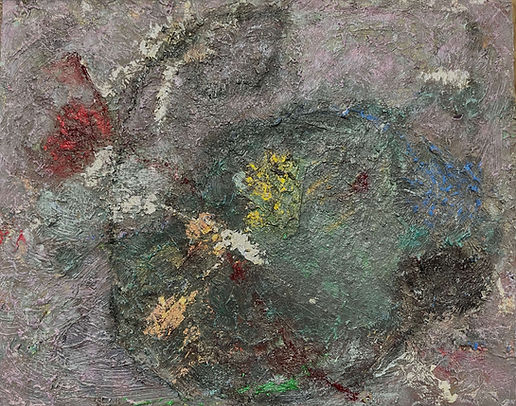

2023
Palimpsest
Enter the series
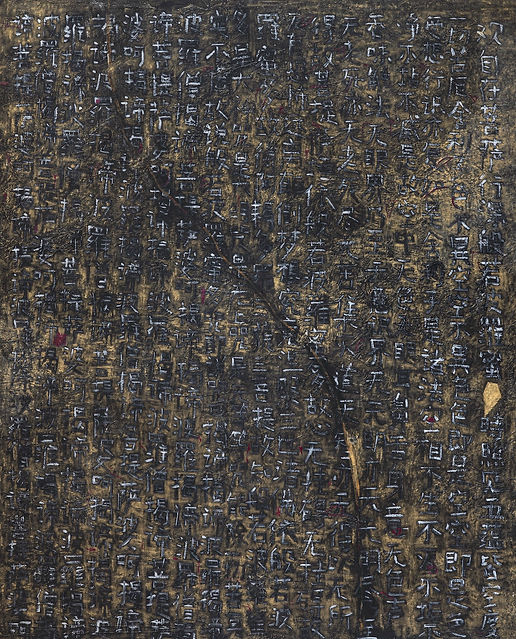
2021 -2025
Abstract Theater
Enter the series

2021-2023
Windows Eyes
Enter the series

2021-2023
Cultural Synaesthesia
Enter the series

2021
Window Concerto
Enter the series

2020-2025
Homeless · Selfless · Heartless
Enter the series
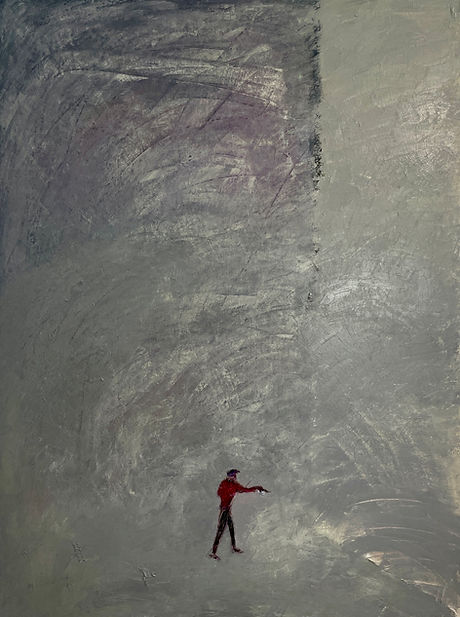
2020
Portrait 100
Enter the series

2016-2019
Entrapmen & Escape
Enter the series

2016-2018
Stillness
Enter the series

2015
Poem Series
Enter the series


2013
Changing
Enter the series

2012
Works before
Enter the series
